

Category Archives: Family Law

7 Tips for Positive Communication with Your Ex

communication with your ex

Communication is an integral part of any type of relationship, be it personal or business. While communicating should be easily undertaken, things can sometimes get so complicated that even the simple act of saying “hello” becomes difficult. Divorce undermines the line of communication between couples, as emotions circulating between them makes it challenging for them to remain courteous to each other.If you are in such a situation, don’t despair.

This article highlights 7 tips that will help you maintain positive communication with your ex-spouse:

Consult A Third Party

If it proves difficult for the two of you to discuss important issues concerning the children, consider seeking help from a third party. You can consult a friend you both trust, a therapist, or a member of the clergy. A therapist can teach you the significance of not engaging in conflicts and how to control your emotions in case you’re tempted to fight back when provoked.

Set Clear Boundaries

You need to set clear boundaries and stay within them, especially where children are involved. It is imperative that each of you understands the value of one another’s relationship with the kids and respect that relationship. It is best when such boundaries are clearly stated in your final divorce pronouncement.

Let The Past Be The Past

Never bring up the past when resolving problems. Talk over the issue at hand and if you can’t remain calm and collected as it’s advisable to excuse yourself from the conversation. You should treat your ex-partner in a similar way you would a business associate.

Schedule appointment to talk over issues, meet in a neutral place, and always be punctual and considerate. Name-calling and blame games should be out of the equation if you want to remain in good talking terms with your ex-spouse.

Be Empathetic

Your ex-spouse has fears and concerns just like you do. Recognizing that will make you feel more empathetic and ready to find a solution to any problem that may arise. Empathy is an excellent equalizer. Once you can see and understand that your ex-spouse loves the kids just like you do, you’ll be less prone to engage in conflict.

Be Mindful Of Your Children’s Needs

It is very important to know what your children need from you as a parent. While you may find it difficult to be around your ex-spouse, prioritizing the needs of your children will help develop the kind of relationship that is beneficial to them.

Practice Active Listening

Make a deliberate effort to not only hear, but also understand the whole message being relayed to you. Moreover, it’s imperative that you remain objective and non-judgmental when listening to your ex.

Respect Your Ex’s Family

Interacting with your ex-spouse’s family members can be an unpleasant and an awkward experience. However, this interaction is inevitable as your children are connected to both sides of their family. Hence, it is everyone’s best interest to get along for the good of the children.

In every relationship, communication is essential for conveying important messages and clarifying issues that may not be well-understood. However, when divorced, it becomes quite challenging to remain in good communication terms with your ex-partner. The marriage may be over, but parenthood reigns on. As such, you need to find ways to positively communicate with your ex-spouse for the well-being and happiness of your children. That’s where the aforementioned tips come in handy.

What are Post-Judgment Child Custody Modifications?

what-are-post-judgment-child-custody-modifications

Child custody is both an involved legal issue and one of tremendous importance to people all around the world. Although understanding these intricacies is something which requires expertise, it is also something that must be comprehensible – at least in broad terms – to the layperson who is actually involved in legal custody matters. Something that can be of particular importance to these people is a post-judgment custody modification.

As the name implies, these rulings are changes which are made to an judgment which has already been rendered by the courts. Whilst occasionally this method is used almost as an appeal, where the changes in circumstances are trivial or non-existence, it is generally the case that a post-judgment modification would be pursued when a change in a parent or guardian’s circumstances justifies such an adjustment.

Relevant changes in circumstances can be varied, and matters which might be considered pertinent under the original judgment are almost always valid reasons to pursue such a modification. Nonetheless certain reasons which are particularly common motivations for seeking custody modifications are;

  • A significant change in financial circumstances, e.g. a new job, a substantial raise, losing a job, etc.
  • Moving home, or the other parent moving home
  • The expressed wish of the child to have different custody arrangements
  • The other parent failing or mistreating the child. Examples may include falling school grades, a decline in behavioral standards, substance abuse, etc. In these cases it is especially important to ensure the safety of all involved, and the California Courts website can direct you to several resources on the topic.

It is also possible to seek smaller custody modifications, for example if your work schedule changes or you wish to take a child on a holiday lasting a day or two longer than you would otherwise be permitted to. These are typically, but not always, easier to acquire as they are much less consequential when weighed against the overarching considerations the courts are obliged to take into account.

These considerations are the point on which all child custody judgments are made, and they apply to modifications just as they do to the original rulings. Furthermore, as well as weighing up the positive and negative aspects of a proposed change in itself, courts will also keep in mind any potential negatives stemming from the process of making the changes itself, as distinct from negatives that may stem from the changes in and of themselves. Therefore it is possible that a change could be denied by the courts due to the effects that adjusting to the changes might have, rather than the merits of the changes itself. It would be rare for this to be the sole or primary consideration, but it may tip the scales in certain cases.

Whilst many such modifications are pursued due to changes in circumstances, modifications to judgments can also be sought as a child ages, on the understanding that their needs and requirements will differ as they grow older. Exactly when to pursue such modifications is not always easy to figure out, and the child’s own opinions and sentiments will often come closer to the forefront the older they get.

Ideally, all child custody matters could be resolved amicably and justly without the need for direct legal involvement. However, in reality, legal judgments are often necessary to ensure that both parents as well as the children involved are given fair treatment that serves the best interests and legal rights of everyone as well as possible. If you have questions about child custody laws or wish to pursue custody modifications, please contact us for more information.

What is a Marital Property Agreement?

marital property agreement

Most married couples decide to jointly share their property and other assets. This makes intuitive sense since in most cases one spouse wants to leave all property and monetary assets to the other spouse. There’s little need to worry about which assets belong to whom: All of the property simply transfers to the other spouse in most circumstances. Marital Property Agreements are for couples who wish to denote how property is shared in the case of divorce.

Separate and Marital Property

There are some more complicated ways to divide property, though, among more than one beneficiary. For instance, marital property acts in many states allow for giving away shared marital property to a third-party recipient.

More broadly, the nuances of how property gets passed on depend on whether property is marital property or separate property as well as specific common law practices in particular states.

Marital property would be any property, earnings or assets that a spouse brought in during a marriage. Everything from a home or family vehicle to the earnings that one spouse brought to the marriage and put in a joint savings account could all be considered marital property.

Separate property, on the other hand, belongs solely to one spouse. Inherited money or inherited property are usually the two most common forms of separate property. Both of these predated the actual marriage – i.e., one spouse had property rights or an inheritance prior to the wedding day.

Post-nuptial agreements and marital property agreements are ways in which one spouse can claim assets or property following a separation, divorce or death. Both post-nuptial agreements and marital property agreements can dictate how marital property and separate property get handed down once one spouse is out of the picture.

Marital Property Agreements

The basis of marital property agreements and marital property acts in the common law system is the realization that each spouse contributes something unique to a marriage.

Marital property acts dictate that property and assets acquired during a marriage are shared equally as marital property among both spouses. This often translates to an underemployed spouse having easier access to credit and the ability for one spouse to make decisions about how monetary and property assets should be divided later on.

So, where exactly do marital property agreements enter the picture? Marital property agreements offer spouses the opportunity to render part or all of marital property shared among both spouses separate property held by only one spouse.

It can work the other way around as well, however: one spouse can turn previously separate property (e.g., an inherited estate) into marital property through a marital property agreement.

Put another way, in states that allow marital property agreements as a common law practice, one spouse can turn individual, separate property into shared marital property or vice versa. Marital property agreements give spouses more control over how their assets get divided during the marriage or after the marriage has ended.

Logistics of Marital Property Agreements

One spouse opting to turn marital property into separate property can make sense under certain circumstances.

There are tax incentives, inheritance laws and estate planning procedures that can make an intelligently executed marital property agreement a win-win for both spouses.

In California and other states that allow marital property agreements, there are some rules that each spouse must follow in order for a marital property agreement to be legally enforceable.

The marital property agreement should be in writing and signed by both spouses. Both spouses must also have full knowledge of each other’s financial circumstances going into the agreement.

Each couple’s legal needs and financial circumstances differ such that one couple might decide to share a lawyer whereas another might hire separate lawyers.

What is Spousal Support?

what-is-spousal-supportIn San Francisco, when a married couple legally divorces, one spouse may be entitled to receive spousal support. Spousal support, or alimony, is a payment or payments made from one spouse to his or her spouse. The support is based on an agreement between the couple or court decision. You may have heard the term partner support and spousal support used interchangeably. There is a difference in California. Spousal support is a term used for legally married couples in the state. Partner support is generally used for couples who were involved in domestic partnerships and were not legally married.
The Purpose of Spousal Support
This type of support is given to one spouse who is considered lower-wage- or non-wage-earner. Alimony serves many purposes. One purpose is to control the unfair economic effects divorce has on the spouse who is not making as much money as his or her spouse.
For instance, if you decided to forego your career to raise your children, you may need time to return to school or a training program to develop your job skills. Another purpose of alimony to help the spouse to continue the standard of living he or she had during the marriage.

How a Spousal Support Case Begins
Before a spouse can receive any financial support, a case must be established with the court. For example, your lawyer can ask a judge to make a spousal support order if you have the following types of cases:

• Annulment

• Divorce

• Legal separation

• Domestic violence restraining order

Types of Spousal Support
The type of alimony a spouse receives depends on the status of the divorce.

Temporary Spousal Support
Pendente lite, or temporary spouse may be awarded while the divorce is pending or when the couple separates.

Rehabilitative Spousal Support
This is also a type of temporary support. It is awarded for a short time to help a spouse get on his her feet while the divorce proceeds. The money is typically given o that the spouse can go to school, obtain job training or find a way to become more self-sufficient. The support may also be awarded to a spouse who stays home with his or her children until they reach school age.

Permanent Spousal Support
Permanent alimony begins after the divorce is final. It generally continues unless two circumstances happen. One the spouse receiving the support remarries or dies.

Reimbursement Spousal Support
This type of support is for one spouse to reimburse, or pay back, his or her spouse for specific expenses. For instance, your spouse decided to go to medical school during the marriage. You worked to put him or her through school while supporting the household. You may receive reimbursement spousal support in exchange for helping your spouse build his or her career.

Factors Considered in Determining the Amount of Spousal Support Paid
You and your spouse may negotiate and agree on spousal support. This means that the agreement will become court order after a judge signs it. However, if you and your spouse cannot agree, a judge must determine the amount—if any—support will be paid. Here are some factors a judge uses in determining spousal support:

• Standard of living during the marriage.

• Length of the marriage.

• Any domestic violence during the marriage.

Talking to a Divorce Attorney
Obtaining or paying spousal support is a life-changing thing. You want to be prepared prior to asking for or fighting against alimony. To learn more about spousal support or obtain representation, contact a lawyer as soon as possible.

Do You Need a Restraining Order?

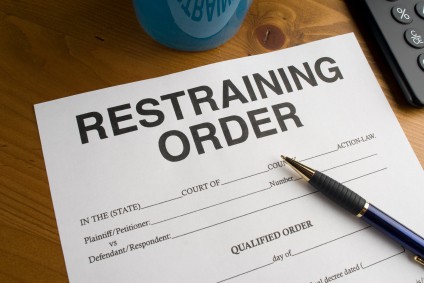
do-you-need-a-restraining-orderTo know if you need a restraining order, it’s important to understand what a restraining order is and what it does. A restraining order is a civil order that stops someone from engaging in threatening behavior. It is used to keep abusers, stalkers, and those who are harassing you away from you so you can feel safe and begin to build stability and order in your life. You will need a restraining order if a person is:


  • threatening you
  • harming you physically
  • engaging in sexual abuse
  • harassing you when you’ve asked them to stop
  • stalking you

A restraining order is a civil protection order. It will not create a criminal record, but it will create a document that can be enforced to protect your safety and the safety of your children if you have any. Criminal charges can often be filed in conjunction with a restraining order because domestic violence, sexual abuse, harassment, and stalking are all crimes. It is a legal process like any other that requires filing a document with the court and a court appearance to get a judge to grant you a protective order. How do you go about getting a restraining order? Is proof needed? How old do you have to be?

You must be 12 years of age to file for a restraining order on your own. You will need to file a document with the court requesting a restraining order. This will start the process of a temporary restraining order that will be in effect until a court date can be set up so that you can present to the judge the reasons for the restraining order. The abuser will be served with paperwork notifying them of the temporary restraining order in affect against them and also of the court date to appear.

A restraining order will prevent your abuser from stalking, harassing, or getting close enough to hurt you again. If this person lives with you, you can also ask for a “kick-out” order that will force them to move and not come to your residence again. Present all the proof you have to the judge so he can fully understand your case and make the terms of the restraining order fit your unique needs completely. It helps to document incidences of violence, stalking, and harassment. If you have police reports, use those, if not, keep a detailed record of specific incidences. For example, it is better to say “He followed me home from work on three occasions over a week-long period,” rather than simply “He’s stalking me.” A judge can better understand your case with details like these.

Once you have filed the paperwork with the court, and met with the judge, you will be issued a restraining order that is effective at your residence, place of employment, and children’s school, if applicable. You don’t need an attorney for this process, but if you’re unsure, it’s good to have an attorney help you with the paperwork. Oftentimes in cases like these, you may be going through a divorce or custody battle, and you’ll need an attorney to help navigate those complex legal processes.

What Does Child Support in California Cover?

Child support is always a very touchy subject for all parties involved. The parent paying the child support wants to make sure that the money is going to the child. The parent receiving the child support wants enough money to pay for all the child’s needs. Both parties can probably agree that raising a child can be expensive.

what-does-child-support-in-california-cover

Child Support Covers the Basics

Child support basically covers the child’s bare necessities—nothing more. The reason why the amount of child support differs from situation to situation is because of many factors like a parent’s ability to pay and income. The financial needs of the child also comes into play. Financial needs mean the amount of money needed to maintain a child’s standard of living. This doesn’t not include the cost of living for the parent who is receiving the child support. The following is a breakdown of what California’s child support covers:

Necessities

The necessities include food, shelter and clothing. Food refers to school lunches and other groceries. Shelter costs may be used to pay for rent or mortgage where the child resides. The money can also pay for the utility bills where the child lives.

Education

Child support cover any educational expenses related to the child’s schooling. This can range from tuition, tutors, school uniforms, application fees and books.

Medical Care

Both parents are required to have health insurance for their child. There are times when insurance doesn’t cover all the medical bills. Typically, medical costs that aren’t covered by insurance is split between the parents. A parent can use the child support he or she receives to cover any outstanding medical bills.

Entertainment

Child support covers basic entertainment. These are age-appropriate entertainment like plays, movies and toys. A parent can use the support to pay for the Internet and cable since the child is using the services.

Extracurricular Activities

The courts do factor in any extracurricular activities a child may participate in such as summer camp, sports and music lessons. The extracurricular activities are considered any regular activities that happen outside of school hours.

Childcare

Childcare includes cots like afterschool programs, daycare, babysitters and nannies.

Transportation

Many parents paying support may not like the fact that child support covers transportation. However, a parent is allowed to pay for basic transportation costs. These costs include car insurance, car maintenance and gas. The costs must be used in relation to the child’s needs. For instance, if the parent receiving the support pays for gas to go on a vacation. If the child is not going, then it is not an allowable cost.

College

This is a gray area. Many parents have a separate agreement regarding how much a parent must contribute to a child’s college education. However, the parent receiving the support can pay for college-related expenses.

What the Paying Parent Should Know

It is a myth that California child support covers only food, shelter and clothing. The support is meant to cover a range of expenses including extracurricular activities and entertainment. California family court doesn’t require parents to prove the child support covers the above costs. It is assumed that the parent receiving the support is paying for the child’s necessary, basic needs. The only time it may require the parent to show where the money is going is when his or her child’s needs are being met.

Child support is fluid. This means a parent can go to court to a modification based on certain circumstances. Individuals interested in a child support modification typically seek the help of a family law lawyer.

What is Premarital Legal Counseling?

Premarital legal counseling is a kind of therapy that’s aimed at ensuring you and your partner have a long and satisfying marriage. During premarital counseling, you and your partner may comewhat-is-premarital-legal-counseling across particular roadblocks that might lead to divorce.

Many churches offer premarital therapy; premarital therapy is usually mediated by a trained marriage and family therapist approved by the American Association for Family and Marriage Therapy.

Prenuptial Agreements and Premarital Counseling 

Sometimes, however, premarital legal counseling could involve looking at the couple’s finances and reasons for pursuing a prenuptial agreement.

Recent surveys from the American Academy of Matrimonial Lawyers says that over sixty percent of divorce lawyers saw an uptick in prenuptial agreements over the last three years.

In addition, this same group of divorce lawyers said that women are disproportionately the ones filing for a prenuptial agreement. This, obviously, jars with the popular conception of the man in the house being the sole breadwinner and filing a prenuptial agreement to protect his assets.

Issues Tackled in Premarital Counseling 

Premarital counseling’s main goal is to have couples discuss their social, emotional and financial expectations for the upcoming marriage, and work out any problems related to those areas. If the couple can’t agree on the financial role for each party before the marriage, then a prenuptial agreement might be an appropriate topic to bring up in premarital counseling.

Generally speaking a prenuptial agreement is a legal contract that couples enter into before a marriage or civil union. A prenuptial agreement mainly covers issues like spousal support and division of property should a divorce or breakup result from the marriage or civil union. A premarital agreement covers eventualities like who will own what following the death of one spouse or a divorce. With a premarital counselor, you can work through which property is yours alone and which pieces of property you expect to be jointly owned by both spouses.

Although this would technically be outside the purview of premarital counseling, a postmarital agreement could be entered into after the marriage to settle many of the same issues (e.g., division of property) following a possible divorce. In addition, you would want a divorce lawyer rather than a premarital counselor to oversee a separation agreement, which is alternatively called a property settlement agreement.

Legal Issues to Address in Premarital Counseling 

Present and future property as well as personal income are all fair game when it comes to the areas divorce lawyers can help mediate in a prenuptial agreement. The legal right to sell or lease property, mortgages and marriage dissolutions can also be discussed before the marriage with a premarital counselor or with a divorce lawyer, granted a premarital agreement is something that both future spouses want to pursue.

A premarital agreement is effectuated only after the couple officially ties the knot. A premarital agreement can be changed or revoked granted that each party is willing to sign a document disavowing the standing premarital agreement. Also, it’s usually wise to sign a premarital agreement no later than a month before the marriage takes place. If a premarital agreement is rushed and signed 30 days or fewer before the marriage happens, issues like duress or coercion can enter the picture and make the premarital agreement more contestable in court.

Both a premarital counselor and divorce lawyer can help you and your spouse establish long and near-term financial goals and marriage expectations. You can discuss the disposition of property and even alimony with a premarital counselor or experienced divorce lawyer. Prenuptial agreements are very binding in California, especially with respect to shared property and alimony.

What is a Prenup?

Once upon a time couples who married stayed married, but that simply is not the case anymore. what-is-a-prenupDivorce has become increasingly common, and because of this, many people now feel it is necessary to protect themselves and their assets from the possibility of their marriage ending in divorce. Prenuptial agreements are one way to do just that. A Prenuptial agreement, sometimes called a prenup, is a contract that outlines what will happen in the case of a divorce. They usually focus on the division of property and assets, and often times outline any alimony or support settlements in the case of divorce.

The stipulations of a prenuptial agreement are unique to each couple. For example, some agreements have further clauses that change settlement amounts if adultery is the cause of the dissolution of the marriage. Prenups can also make arrangements in the event of one’s death rather than in the event of a divorce. Prenups stipulations will depend almost entirely on the couple in question and what they consider valuable as they enter into a marriage.

What are the Requirements for a Prenup?

In the United States a prenuptial agreement is considered valid, and it is recognized in every state, however, not all prenuptial agreements are enforced, and some have found ways to have prenups thrown out or invalidated in court. In order to be considered a valid contract it must meet the following requirements;

  • The prenuptial agreement must be written. Oral contracts are not enforceable.
  • Both parties must sign the contract voluntarily in front of counsel who can attest that both parties entered into the contract willingly.
  • Both parties must be completely informed of the others intentions and assets.
  • Both parties must sign the contract in front of a notary for it to be deemed valid.
  • The document must be signed prior to the issuing of the marriage license. ‘

Because of the requirements of the contract many agreements have been thrown out or deemed invalid when brought to court. Most commonly, people argue that the prenup was not entered into willingly, or that they were coerced to sign the agreement. Often times one party can also argue that they were not offered full disclosure by the other party at the time of the agreement, thus making it invalid.

When Do Couples Need Prenups?

Some will argue that a prenup is only intended for the very rich or very famous as they are the people who need to protect their assets from a divorce. Well, that’s not exactly the case. Some lawyers argue that every couple should have a prenup. Simply put, divorces are messy. Whether you are going through a divorce a year into the marriage of 15 years into the marriage, you should want to make the process as smooth as possible, and prenups do just that. Not to mention, just because you aren’t rich today, doesn’t mean you won’t be rich someday. Today’s waiter may turn into tomorrow’s best seller, today’s college dropout may turn into tomorrow’s technology tycoon. Fact of the matter is that you never know where you will be or how your marriage will pan out, so it is best to protect yourself at the onset and ensure if your marriage ends it can end amicably, or at least, with the least amount of hassle.